
Search Window Sticker
Table of Contents
Key Takeaways
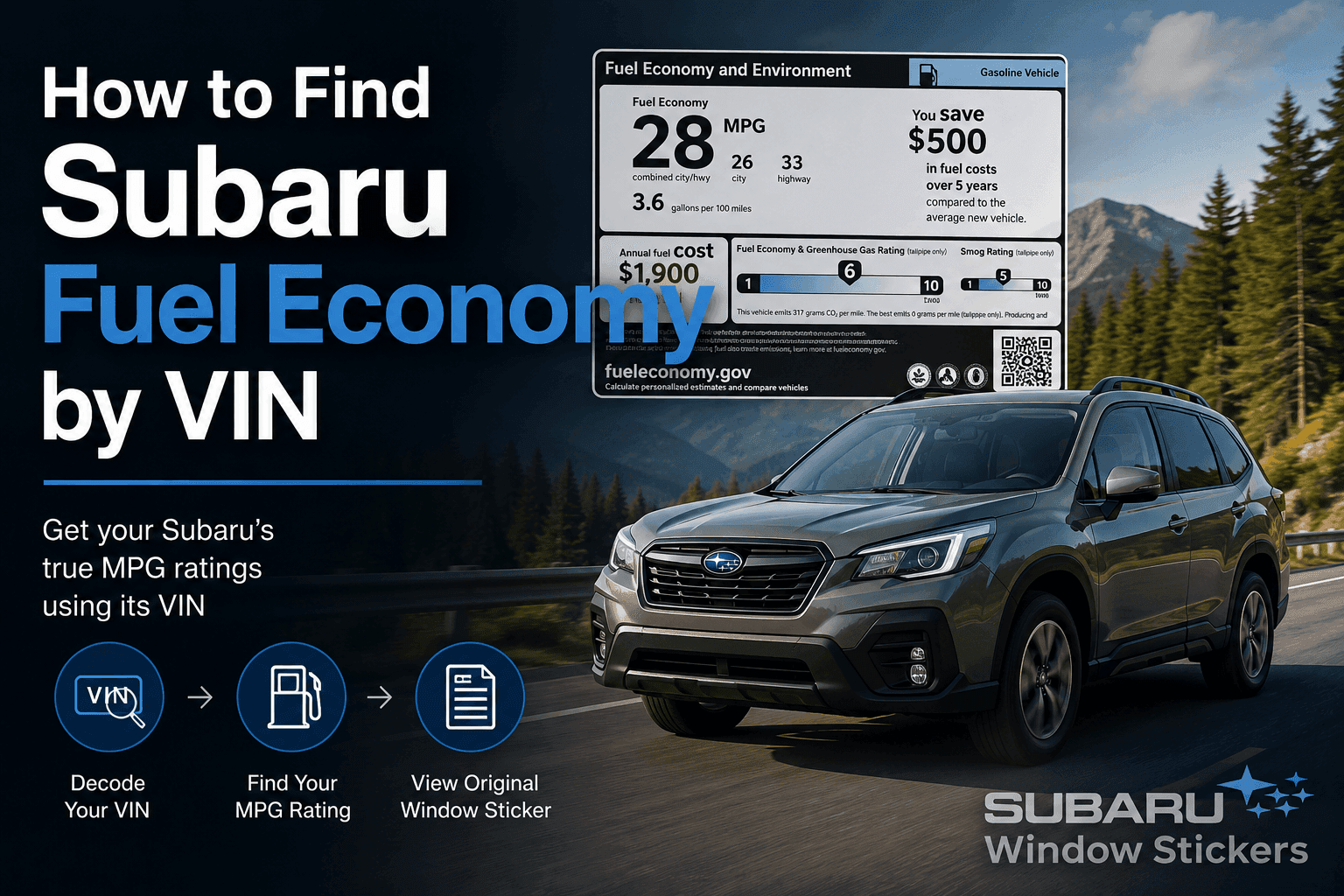
 A Subaru VIN doesn't contain MPG numbers. Instead, it identifies the vehicle's model, engine, trim, and drivetrain, which are used to match the correct EPA-certified fuel economy rating.
- The most accurate way to verify factory fuel economy is by decoding the VIN first, then matching the vehicle's specifications with its official EPA rating or window sticker.
- A Subaru window sticker shows more than just fuel economy, including the original MSRP, factory options, standard equipment, safety features, and warranty information.
- Checking the original fuel economy is especially useful when buying a used Subaru, comparing different trims, or verifying that a vehicle matches its factory specifications.
Many used Subaru vehicles no longer have the original window sticker, making it difficult to confirm the factory fuel economy rating. While owners often rely on online estimates, those figures may not match the exact trim, engine, or drivetrain the vehicle left the factory with.
The good news is that there are several reliable ways to recover the original EPA fuel economy rating. This guide explains how to find your Subaru's MPG by VIN using the vehicle's identification number, official EPA certification data, and a recreated window sticker.
What the VIN Actually Tells You About Fuel Economy
Many people assume a Subaru VIN directly stores the vehicle's fuel economy rating. In reality, the VIN doesn't contain MPG figures. Instead, it identifies the factory specifications that determine which EPA-certified fuel economy rating applies to the vehicle.
For example, two Subaru Outback models from the same year may look identical, but one could have a naturally aspirated 2.5-liter BOXER® engine while the other uses a turbocharged 2.4-liter engine. Because these powertrains perform differently, they also receive different EPA fuel economy ratings.
How the VIN Connects to the EPA Fuel Economy Rating
After the vehicle configuration is identified, it can be matched with the official fuel economy certification issued by the U.S. Environmental Protection Agency (EPA).
Before a Subaru goes on sale, each engine and drivetrain combination is tested using standardized EPA procedures. The resulting city, highway, and combined MPG figures become part of the vehicle's certification record and are later printed on the Monroney window sticker.
Method 1: Decode the VIN to Identify the Exact Configuration
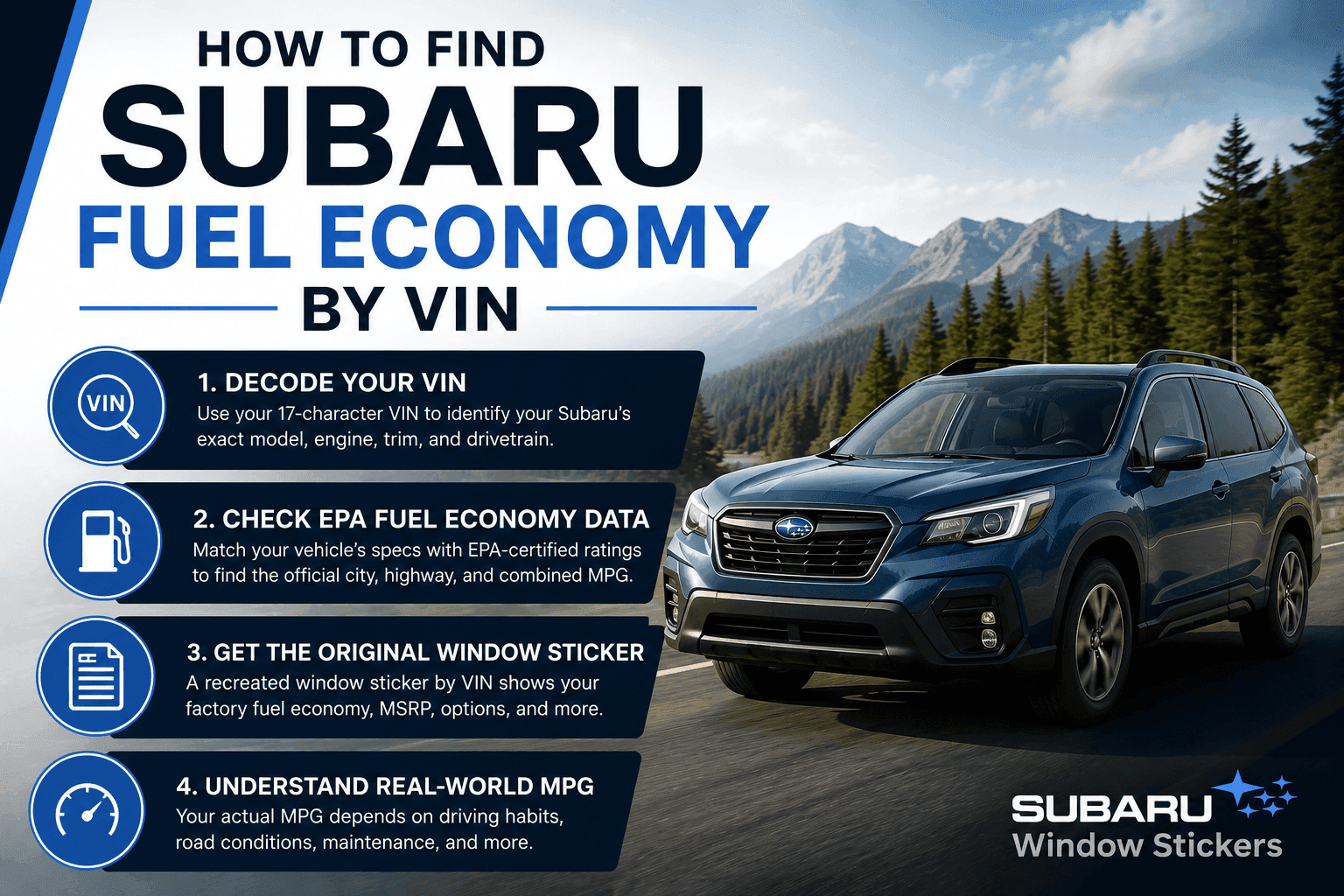
Before looking up your Subaru's fuel economy, it's important to confirm exactly how the vehicle was built. Even two Subaru models from the same year can have different engines, drivetrains, or trim levels, which may result in different EPA fuel economy ratings.
Decoding the VIN helps identify the factory specifications needed to match the vehicle with the correct fuel economy data.
Find Your Subaru VIN
The first step is locating the 17-character Vehicle Identification Number (VIN). Subaru places the VIN in several locations, making it easy to verify even if the original window sticker is missing.
You can find the VIN in a few spots on the car and the vehicle’s documentation, like the title, registration, or the bill of sale.
- Driver-side dashboard (visible through the windshield)
- Driver-side door jamb
- Vehicle registration
- Insurance card
- Vehicle title
- Registration
- Bill of sale
Every Subaru manufactured for the U.S. market since 1981 uses a standardized 17-character VIN.
Method 2: Cross-Reference the EPA's Certified Rating
Once you've confirmed your Subaru's exact configuration, you can compare it with the official fuel economy data published by the U.S. Environmental Protection Agency (EPA). These certified ratings are the same figures printed on the original Monroney window sticker when the vehicle was new.
Although this method is reliable, it requires knowing the correct model, engine, transmission, and drivetrain beforehand.
Understand What the EPA Fuel Economy Rating Includes
Every new Subaru sold in the United States undergoes standardized fuel economy testing before it reaches dealerships. The EPA uses controlled testing procedures so consumers can compare vehicles using the same evaluation methods.
The certified fuel economy information typically includes:
- City MPG
- Highway MPG
- Combined MPG
- Estimated annual fuel cost
- Fuel Economy & Environment rating
- Estimated fuel consumption
These values become part of the vehicle's official certification record and are later displayed on the factory window sticker
Method 3: Pull the Recreated Window Sticker by VIN
If you'd rather skip manually comparing VIN details with EPA records, a recreated Subaru window sticker can provide the original fuel economy information in one place. Since it is generated using the vehicle's VIN, it reflects the factory specifications associated with that specific Subaru, making it a convenient way to verify the original EPA rating and other vehicle details.
For used car buyers, current owners, and sellers, this approach often saves time by eliminating the need to search through multiple sources.
What Information Does a Subaru Window Sticker Include?
A recreated Subaru window sticker is designed to mirror the information found on the original Monroney label issued when the vehicle was new. In addition to fuel economy, it includes many of the factory specifications that help verify how the vehicle was originally equipped.
This is the information you will find on a Subaru window sticker.
- EPA city, highway, and combined MPG ratings
- Estimated annual fuel cost
- MSRP (Manufacturer's Suggested Retail Price)
- Standard equipment
- Optional packages and factory-installed options
- Engine and transmission details
- Drivetrain information
- Interior and exterior colors
- Safety ratings and features
- Warranty information
Because all of these details appear in a single document, the window sticker serves as a valuable reference when researching or verifying a Subaru's original configuration.
Why is Checking the Fuel Economy Through the Window Sticker Faster Than Manual Research?
When you lookup for certain car’s fuel economy, it requires a few steps. First, the VIN must be decoded to find the vehicle’s correct specifications. Then, those specifications need to be matched with the appropriate EPA-certified fuel economy record.
While this process is reliable, it can become time-consuming when multiple trims or powertrain options are available for the same model year. For example, a Subaru Outback may be offered with different engine options or trim levels that have unique fuel economy ratings.
This is the reason why getting a window sticker is easier than decoding the VIN and going back and forth between the process, as you just need the VIN to get it done in seconds.
How to Get a Subaru Window Sticker
Getting a Subaru window sticker is easier than you might think. You can follow these simple steps and get it done within seconds.
Step 1: Find the VIN
Check the driver’s side doorjamb, engine bay, or vehicle documentation to find the VIN.
Step 2: Visit Subaru Window Sticker
Once you find the VIN, visit Subaru window stickers and click the form; then you may enter the Subaru VIN. Once it is done, click the button to submit the form.
Step 3: Get the Window Sticker
Examine the preview page where you can see the vehicle’s specs and market value. Then, proceed to payment to receive the full Subaru window sticker.
Checking Subaru Fuel Economy Made Easy
Finding your Subaru's original fuel economy rating starts with understanding what the VIN can and cannot tell you. Whether you choose to decode the VIN manually, cross-reference EPA records, or use a Subaru window sticker, each method can help verify the original city, highway, and combined MPG ratings.
For most owners and used car buyers, a recreated Subaru window sticker is the quickest way to view the original fuel economy information alongside MSRP, factory options, standard equipment, safety features, and other vehicle specifications in one place.